

It’s been a fairly insane year for me involving unemployment, deaths in the family, and what seems to be one crisis after another. One of the ways I try to stay grounded is by reading books. I read constantly for both pleasure and purpose and listen to audiobooks when I’m driving or working out. I’m always trying to research something and that always turns into some other avenue of interest which requires another book.
I decided to compile a list of books I’ve read this year (or that have struck me recently). There isn’t really any rhyme or reason to it, though I’ve been meaning to interview a few authors on this list and need to kick myself to get those interviews scheduled and done. I’ve also included links to Amazon for all these books, which get me a little kickback but you can probably get most of them cheaper on AbeBooks.
Favorite Non-Fiction Novel - The Maniac by Benjamin Labatut
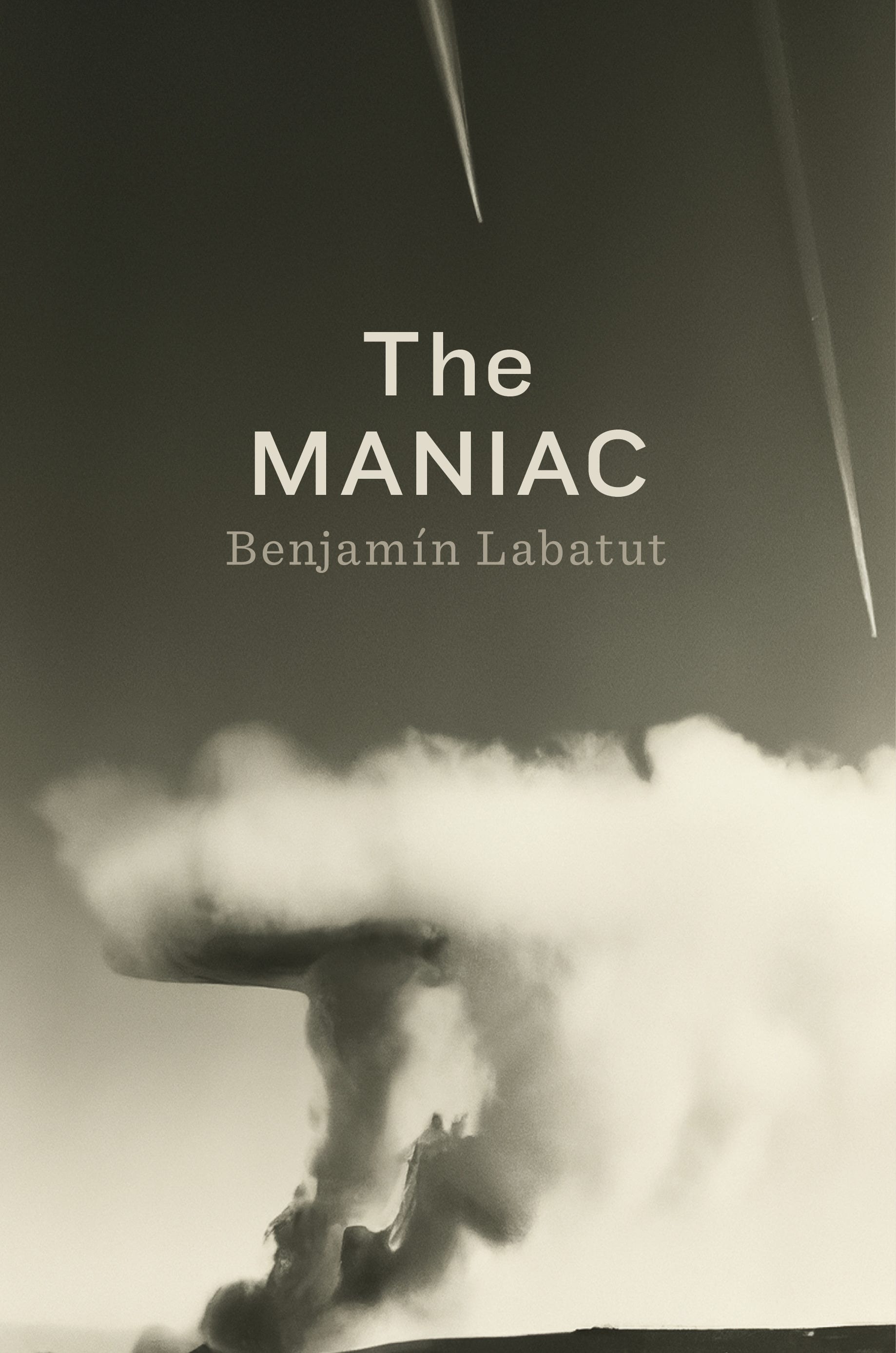
The Maniac is a whirlwind of a book that mostly follows the life of polymath John Von Neumann. It presents Von Neumann through the eyes of those around him and, through those eyes, he is brilliant, energetic, incomprehensible, and even frightening as he builds bombs and computers, develops game theory, and proposes self-reproducing machine automation. The latter part of the book leaps from Von Neumann’s accomplishments and applies them to modern AI in an absolutely riveting account of the first AI to beat the human Go Master. This book is more novel than non-fiction but it is riveting.
Favorite Audiobook - The Invisible Man by Ralph Ellison, read by Joe Morton
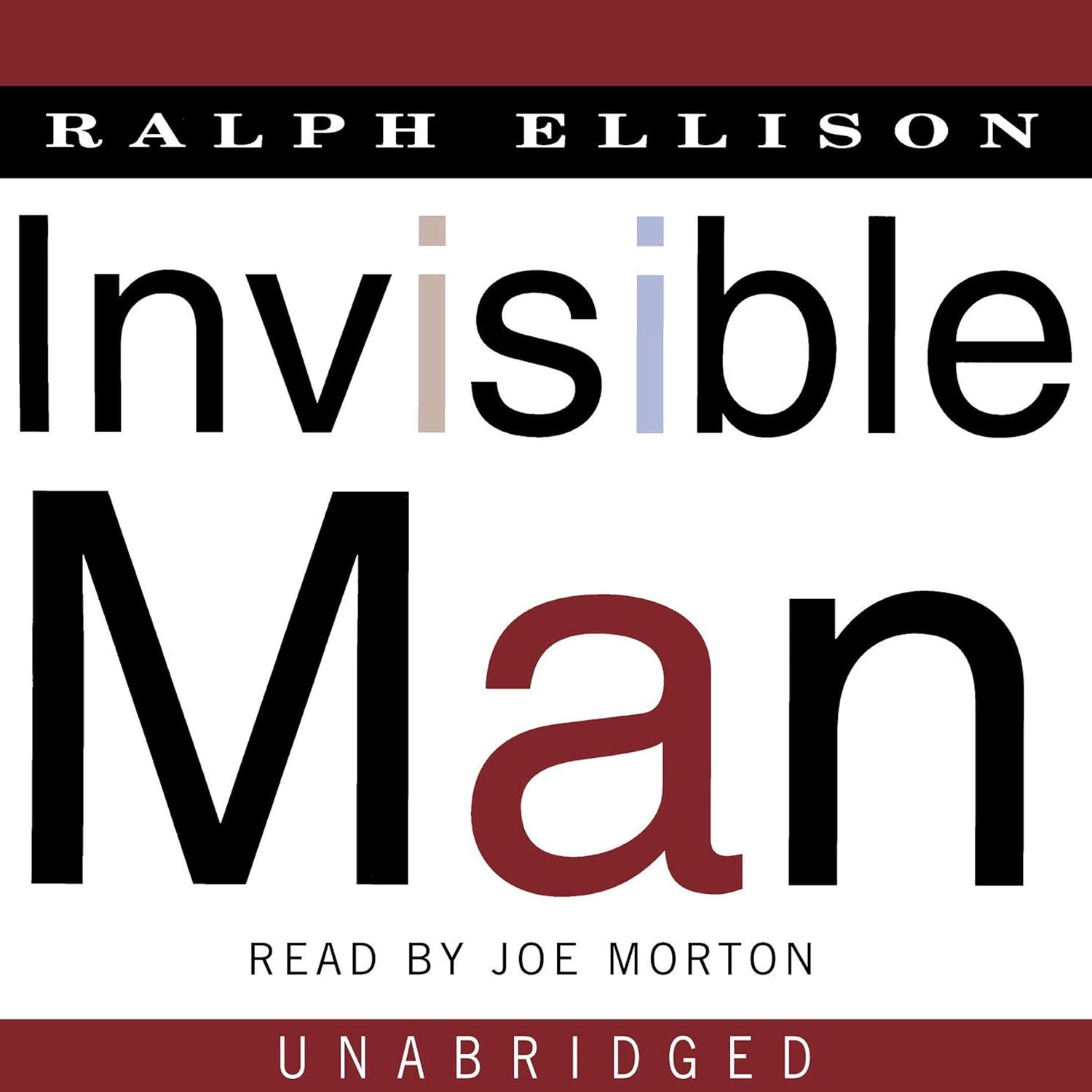
The Invisible Man had escaped my attention in high school and college but I picked it up on Audible. This was a good choice. The book is narrated by Joe Morton (who played technologist Miles Dyson in Terminator 2) and it is a powerful piece of work. Morton brings a certain relentless frustration, drive, and outrage to this book about the black experience in early 20th century America.
I did not realize how much this book is about power and cynicism of all men. Invisible Man is unsparing in its portrayal of men, black and white alike, who leverage race, poverty, and guilt to their own ends. It is alternatively beautiful, heartbreaking, and infuriating and Joe Morton reads it all in an unforgettable performance.
Favorite Comic Novel - Human Capital by Moro Rogers
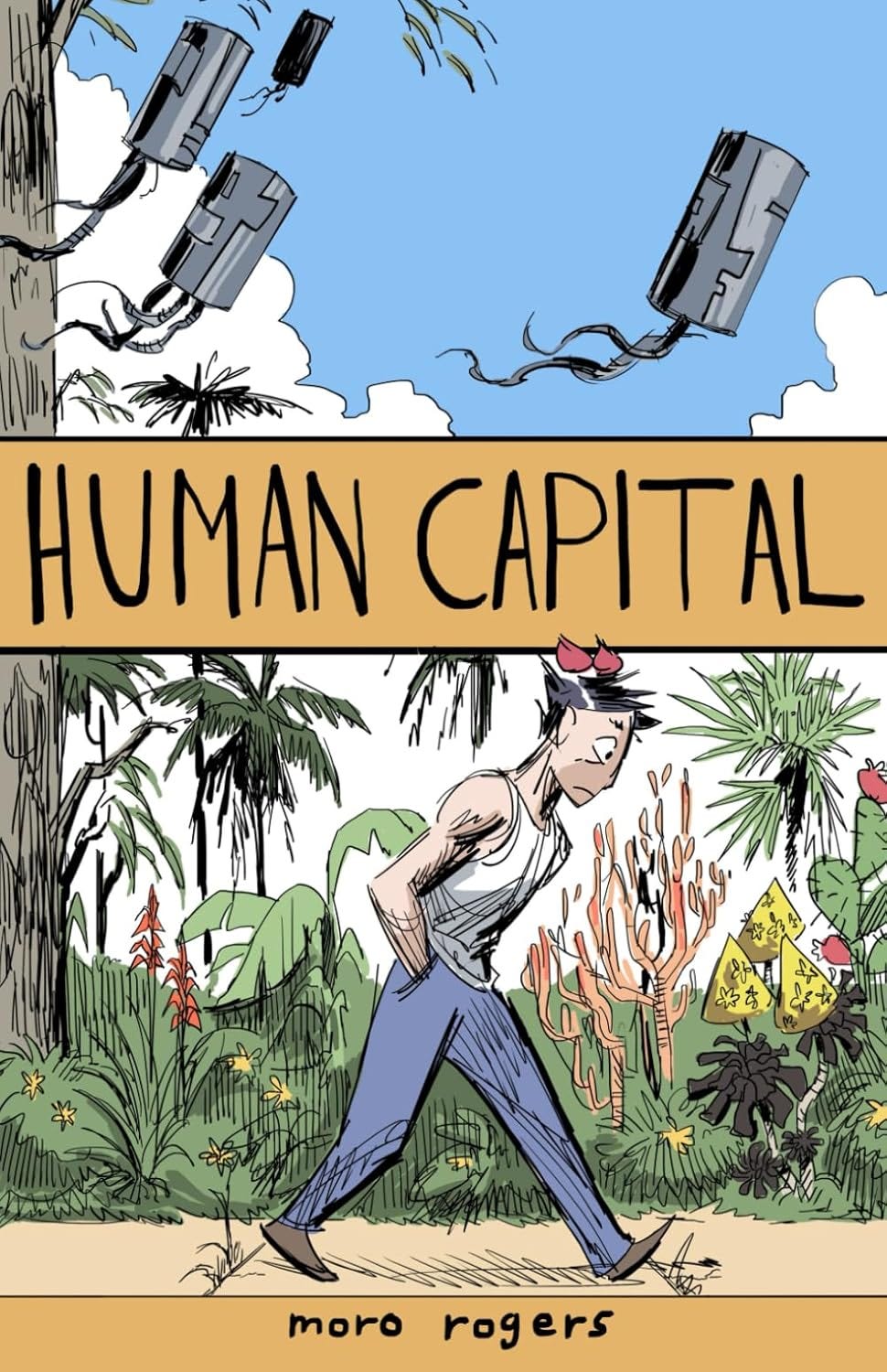
This book is really tremendous and extremely timely. Human Capital is about a near-future in which all human needs are filled in a universal basic income sort of way and the result is an underclass of people who, though their needs are met, struggle to find meaning and purpose while an elite class soars above them at unimaginable decadence. It’s a book exploring the outworking of a fully automated world, the creative impulse, the drive for inspiration and success, and what happens to a social hierarchy when the regular signals of value, connection, and community are short circuited.
I’m not going to lie, this book is manic. It has a strain of techno-magical realism to it that stretches it beyond a stable narrative frame. It is a wild ride and I sometimes got lost in it. But it’s captivating and it is trying to playfully engage what might happen to us in a world where we have all we need and nothing we want. I loved it. I’m going to read it again on my Christmas vacation.
Favorite Philosophy Book (About People) - The Dignity of Dependence by Leah Libresco Sargeant
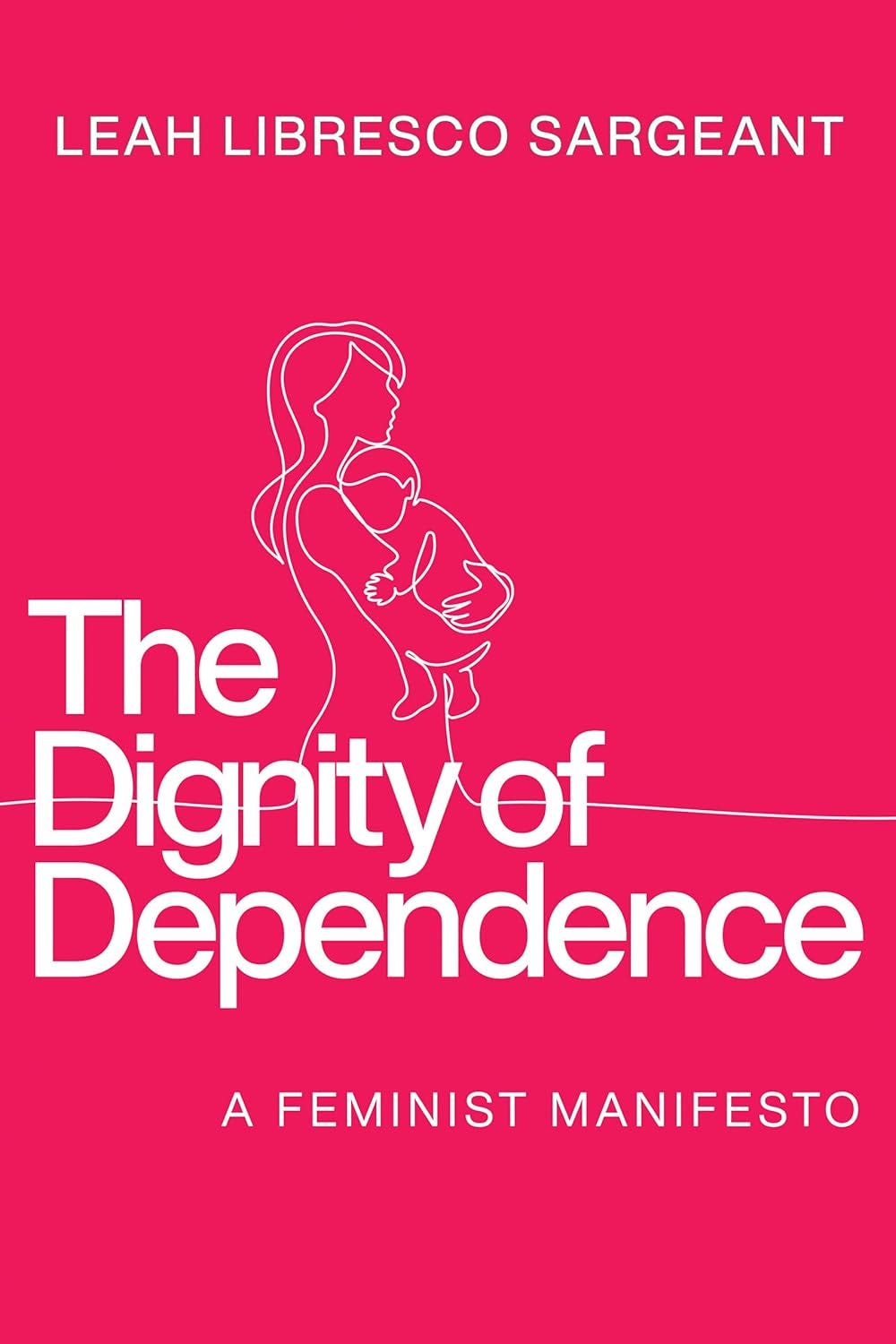
I did not know this was going to be a philosophy book. I’ve followed Leah Libresco for about a decade and knew her from twitter as a thinker, mother, writer, and Catholic. I expected her book to reflect her writing on twitter and her op-ed writing, but it goes far deeper than that.
Leah presents us with an ontological case for the dignity of dependence that stems from the reality of human bodies. Her primary concern is about how female bodies are naturally more dependent (physically, socially, relationally) and are vessels of dependence through the natural states of pregnancy and motherhood. She observes how much our society recoils from open signs of dependence, encouraging people (mostly women) to hide the indicators that their bodies throw out signals of dependence throughout their lives and especially around their capacity as bearers of children.
I did not expect something this rich. I didn’t expect these extended ruminations of the self and the other and the nature of this co-mingling of the dependents and those who care for them. This is a deeply thoughtful, deeply human book that insists that we ask some hard questions about how we see ourselves and others as relational and inter-dependent creatures in a culture that idolizes individuality and independence.
Favorite Philosophy Book (About Animals) - The Unheeded Cry by Bernard Rollin
I did not know this was going to be a philosophy book. I discovered Bernard Rollin because I’m close friends with one of his students who works in a field of what I’m going to call “industrial animal welfare”. Rollin was a philosopher who focused on the ethics of animal pain, specifically in a farm and veterinary setting. The full title of this book is “The Unheeded Cry: Animal Consciousness, Animal Pain and Scientific Change” and it is his philosophical case for the moral consideration of animal consciousness and pain and what our responsibilities might be toward that, especially in the context of industrial farming.
If this sounds too hippy-dippy, you really should read this book. Rollin is refreshingly practical. His view of animal pain isn’t that we all need to become vegans but that we need to incorporate an understanding of the importance of the animal experience into the process of how we utilize them. He isn’t anti-meat, he just wants us to recognize the very practical reality that meat comes from a thing that is conscious and can feel pain and we should treat that reality with respect and not pretend it is a non-issue.
The Unheeded Cry a deeply practical, deeply humane book. I really enjoyed the almost sarcastic dismissal that Rollin had for people who refuse to accept that normies think their abstract theories of animal welfare (like giving animals voting rights) are stupid. Rollin wants proponents for animal welfare to strive to put their efforts into promoting ideas that resonate with the practical and moral core of their fellow citizens and not promote ideas that make them sound like crazy people who should be quickly dismissed.
To this end, his case for animal consciousness and a consideration of animal pain is profoundly plain and clear. It shies away from philosophical abstractions which philosophers often use to hide their nonsense and makes the case in a language and reasoning that appeals to our very human moral sensibilities and empathies.
Favorite Philosophy Book (About Buildings) - The Timeless Way of Building by Christopher Alexander
I guess I read a lot of philosophy this year. This was not intentional.
This has been a really emotional year for me. I picked up The Timeless Way of Building as a comfort read. I’ve read it before and makes my heart ache for the beauty and longing of it all.
Christopher Alexander is one of the top 10 intellectuals who has impacted my life. He was mostly an architect but, as you read Timeless Way, you get the sense that architecture was a means to an end for him. What he really wanted was to help people be more human. He didn’t want to make buildings, he wanted to make homes. Alexander believed that homes, shops, and towns were made out of patterns of natural human interaction which pointed to natural human longings. He believes that we could identify those patterns and put them together in a way such that the houses we live in aren’t just a roof over our heads. He wants these buildings to support our lives and bring out the best of who we are. He wanted to build houses that encouraged children to play around grandparents, where mom could work in her knitting corner while still being a part of the social gatherings. He promoted building things that give life, promote connection, and inspire joy.
Timeless Way is my favorite philosophy book because it is bursting at the seams with a relentless love for life and and encouragement to the reader that they can build something that gives life, supports family and joy, and enriches the community. He wants everyone to just sit down and think about who they are, how they want to live. He believed that, if we ask the right questions, we can all build a space that puts something natural, healthy, and good into the world.
Favorite Partial Read - Mark Twain by Ron Chernow
There is a joke that when dads turn 35, they have to pick a period of history that they will obsess about. I ended up with two and one of them is the 1850’s-1890’s which covers the Civil War through to the Wild West. This is an era of industrial, political, martial, and intellectual giants. Mark Twain was one of them.
This book gives a great account of the early parts of Twain’s life, from his boyhood in Missouri, his ambitions to be a steamboat captain on the Mississippi, his stint as a half-hearted Confederate soldier, and his explosion into the literary work with Innocents Abroad.
This book portrays Twain in incredible detail; perhaps too much detail. I suspect the author wanted to write the definitive biography of Twain’s life and Twain, a compulsive letter writer, provided him with more than enough material about even the smallest events in his life. I gave up about two thirds of the way through when it sounded like we were in for another 20 pages about an elderly Twain’s umpteenth disastrous money-making scheme.
The book is good but is hobbled by Chernow’s strange insistence of judging Mark Twain by the moral standards of a 2010’s critical studies graduate student. Twain was an enormously vocal figure against slavery and racism, a friend to Jews, blacks, and even Europeans (though he held a strong antipathy for Native Americans). But Chernow frequently scolds Twain for writing about race using words and phrases that were tepid in Twain’s time. He even scolds Twain for using a stereotype in a complimentary way. He applies the word “anti-Sematic” to Twain in a few bizarre places where Twain stands in deep admiration of the Jewish people, defending them stalwartly in writing and in speeches to an unfriendly world. Twain was often a lonely defender against bigotry and racism of all kinds and he carried this message across the world. It seems like a base form of ahistorical smugness for Chernow to slap Twain on the wrist for observing that 19th century Jews were frugal.
This book is good in parts, even great. But it ultimately shoots itself in the foot with a lack of focus and a refusal to look at Twain as a figure who lived in his own time and not ours.
Favorite “Technical” Book - The Phoenix Project by Gene Kim, Kevin Behr, and George Spafford
The company I’m working for has a “book club” for the engineering department and this year we read The Phoenix Project together. It is a fun novel about building software and managing IT at a big company. If you’re not in the software business, this might not be for you, but it was definitely a huge help for our team. Reading this book together gave us a touch-point and common insight into a lot of business and process difficulties like backlogs, bottlenecks, release velocity, and a host of other difficulties in project development and release.
The authors cleverly embed these ideas into a compelling novel detailing the drama, power struggles, personality clashes, and technical challenges that are common on software teams. There were a lot of characters in the book who had the quirks and traits that many on my team recognize from our years in the industry. It was a great book and probably the book that had the most direct impact on my life this year.
